

Pneumococcus is a causative agent of severe pediatric diseases such as sepsis and meningitis, as well as common conditions like otitis media and sinusitis. Therefore, receiving the Synflorix vaccine fully and on schedule is crucial for effective disease prevention.
1. Vaccine Information
Synflorix vaccine prevents 10 pneumococcal strains (Streptococcus pneumoniae) responsible for diseases such as infectious syndromes, meningitis, pneumonia, sepsis, and acute otitis media, among others.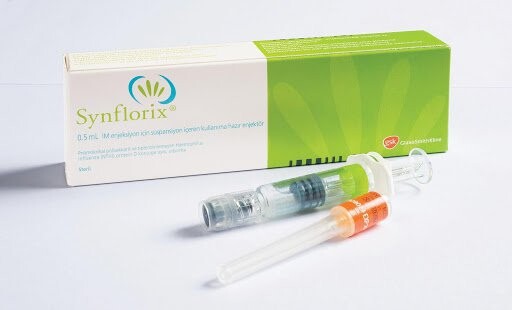
Origin
The Synflorix vaccine is researched and developed by GlaxoSmithKline (GSK) – Belgium, a world-leading pharmaceutical and biological products corporation.
Route of Administration
Synflorix is administered via intramuscular injection into the anterolateral aspect of the thigh in infants, and into the deltoid muscle of the arm in older children. Synflorix must not be administered intravascularly or intradermally.
Contraindications
Synflorix is contraindicated in individuals with hypersensitivity to any component of the vaccine.
Postponement of Vaccination
Vaccination should be postponed in subjects suffering from acute fever or acute infection.
Adverse Reactions
- Local reactions are commonly reported with a higher incidence in children >12 months of age compared to younger infants.
- Adverse effects tend to be more severe when administered concomitantly with whole-cell pertussis vaccines.
- Common reactions: fever >38°C, pain, swelling, redness, or induration at the injection site. The child may exhibit irritability and a temporary decrease in appetite.
Drug Interactions
Synflorix can be administered simultaneously with the following vaccines, provided that they are injected at separate anatomical sites: diphtheria, acellular pertussis, hepatitis B, inactivated polio vaccine, Haemophilus influenzae type b (Hib) conjugate vaccine, measles – mumps – rubella vaccine, varicella vaccine, meningococcal vaccine, and rotavirus vaccine.
Storage
The vaccine must be stored at temperatures between +2°C and +8°C. Do not freeze.
2. Target Population
Synflorix (Belgium) vaccine is indicated for infants from 6 weeks of age up to their 6th birthday.
3. Vaccination Schedules and Regimens
Pneumococcal vaccination schedule for infants aged 6 weeks to 6 months:
* Four-dose regimen:
- 1st dose: Can be administered from when the infant reaches exactly 6 weeks of age.
- 2nd dose: Administered approximately 1 month after the first dose.
- 3rd dose: Administered approximately 1 month after the second dose.
- Booster dose: Administered at least 6 months after the 3rd dose (typically after 1 year of age).
Pneumococcal vaccination schedule for infants aged 7 to 11 months (previously unvaccinated):
* Three-dose regimen:
- 1st dose: Administered when the infant is ≥7 months of age.
- 2nd dose: Administered 1 month after the first dose.
- Booster dose: Administered during the second year of life and at least 2 months after the 2nd dose.
Pneumococcal vaccination schedule for children aged 12 months to before their 6th birthday (previously unvaccinated):
* Two-dose regimen:
- 1st dose: Administered between 12 months and 5 years of age.
- 2nd dose: Administered at least 2 months after the 1st dose.
Synflorix exhibits a high safety profile. Following pneumococcal vaccination, children frequently experience mild, self-limiting reactions that require no special medical treatment. These represent the body's normal immunological response, specifically:
- Local reactions: Swelling, pain, and erythema at the injection site.
- Systemic reactions: Fever above 38°C, poor feeding, irritability, and crying.
 VISIT THE NEAREST VACCINATION CLINIC FOR CONSULTATION AND IMMUNIZATION TODAY
Contact Information:
HANOI MEDICAL UNIVERSITY VACCINATION CLINIC "Safe - Attentive - Reliable" Facility 1: No. 1 Ton That Tung, Dong Da District, Hanoi.Facility 2: No. 35 Le Van Thiem, Thanh Xuan District, Hanoi.
 Working hours: - Monday to Sunday morning
- Morning: 8:00 AM - 11:30 AM - Afternoon: 1:30 PM - 4:30 PM Fanpage: https://www.facebook.com/phongtiemchungdhy
https://www.facebook.com/phongtiemchungdhycoso2 Hotline: 02462597231 / 0868098399