

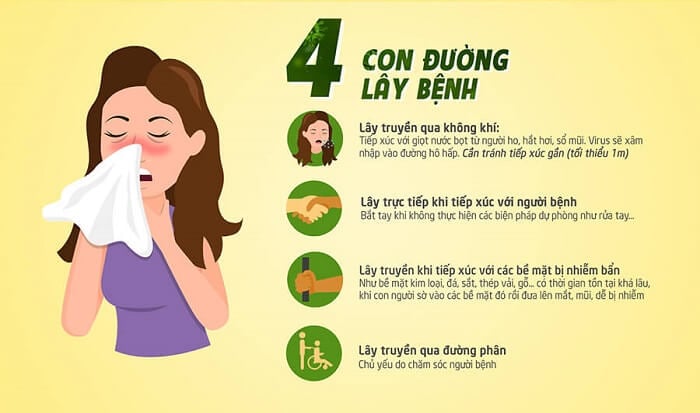
1. CORONAVIRUS TRANSMISSION VIA AIR
These droplets of nasal mucus or saliva are expelled from the mouth or nose when we cough, sneeze, laugh, sing, breathe, and speak. Typically, they fall to the floor or ground if they are not intercepted along their trajectory.
To enter cells, virus-laden droplets must pass through the eyes, nose, or mouth. Some experts believe that sneezing or coughing may be the primary forms of transmission. According to Professor Kwok, direct conversation or sharing meals with others also increases the risk of infection.
What is the safe distance to prevent coronavirus infection?
According to Christian Lindmeier, a spokesperson for the World Health Organization, it is best to stand at least 3 feet (approximately 0.92 metres) away from an infected person. The United States Centers for Disease Control and Prevention states that standing within 6 feet (approximately 1.83 metres) poses a risk of infection.
Anyone who has close contact (within a distance of 2 metres) with a person showing respiratory symptoms (sneezing, coughing, etc.) is at risk of direct exposure to droplets and contaminated waste. Those in closest contact with patients (high risk of infection) are typically family members, colleagues, and fellow passengers.
2. TRANSMISSION VIA CONTACT WITH CONTAMINATED SURFACES
When an infected person sneezes into the environment, virus-containing saliva droplets can travel up to 3 metres (approximately 10 feet) and remain suspended in the air before falling to the ground. Whether a surface is dirty or clean does not matter. If an infected person sneezes and their droplets land on a surface, another person can "pick up" the virus by touching that surface. It remains unclear how much viral load is sufficient for infection. When falling onto metal surfaces, the virus survives for at least 12 hours. "Therefore, always remember that if you touch any metal surface, you must wash your hands thoroughly with soap," stated Assoc. Prof. PhD. Nguyen Lan Hieu.
nCoV can remain viable on fabric for 6-12 hours. Regular laundry detergent can also kill the virus. For winter clothing that cannot be washed daily, they can be exposed to sunlight to eliminate the virus.
This virus can persist on bus grab handles, touchscreens, or other surfaces. Many people fell ill after visiting a temple in Hong Kong, prompting the city's Centre for Health Protection to collect samples there. They discovered that the water taps in the restrooms and the fabric covers on Buddhist scriptures all tested positive for the coronavirus.
A study on other coronavirus strains showed that they can survive on metal, glass, or plastic surfaces for anywhere from 2 hours to 9 days.
According to Prof. PhD. Nguyen Van Kinh, former Director of the National Hospital for Tropical Diseases, once entering the body, nCoV persists for approximately 3-4 weeks. In the external environment, nCoV is easily destroyed by light, ultraviolet rays, and high temperatures; however, in cold, humid environments and on metal surfaces, nCoV can survive for 1-3 days.
In the southern region, warm sunshine helps control the spread and dispersion of the virus. Meanwhile, in the northern region, the weather is cold and humid; therefore, isolation and quarantine measures for confirmed and suspected cases must be intensified.
4 WAYS TO PREVENT CORONAVIRUS INFECTION
1. WEAR GLOVES WHEN NECESSARY
When travelling on public transport such as buses, you may occasionally need to hold onto communal objects that many others touch, such as balance grab handles. Therefore, wearing gloves is essential when going out.

If you engage in a social handshake and must remove your gloves, be sure to carry alcohol-based hand sanitiser to clean your hands immediately afterwards.
2. WASH HANDS FREQUENTLY
Wash your hands frequently with soap and water or an alcohol-based hand rub, even if your hands do not appear dirty. Frequent handwashing with soap and water or an alcohol-based sanitiser will kill the virus if it is present on your hands.
3. MAINTAIN A SAFE DISTANCE OF AT LEAST 1 METRE FROM OTHERS
Particularly from individuals exhibiting symptoms such as coughing, sneezing, and fever. People infected with respiratory pathogens such as 2019-nCoV expel small virus-containing droplets when coughing or sneezing. If you are too close, you risk inhaling these viral particles.
4. AVOID TOUCHING YOUR EYES, NOSE, AND MOUTH
Your hands touch numerous surfaces that may be contaminated with the virus. If you touch your eyes, nose, or mouth with contaminated hands, you can transfer the virus from those surfaces to yourself.
5. Use a tissue or your sleeve when sneezing; this minimises the risk of transmitting the virus to others if you are carrying it.
6. Consume thoroughly cooked food and drink boiled and cooled water.
7. Keep away from animals, as COVID-19 is believed to be of animal origin.
8. Avoid crowded places; if attendance is necessary, wear a medical mask to prevent inhaling virus-laden airborne droplets when infected individuals sneeze or cough.
Source: Ministry of Health