
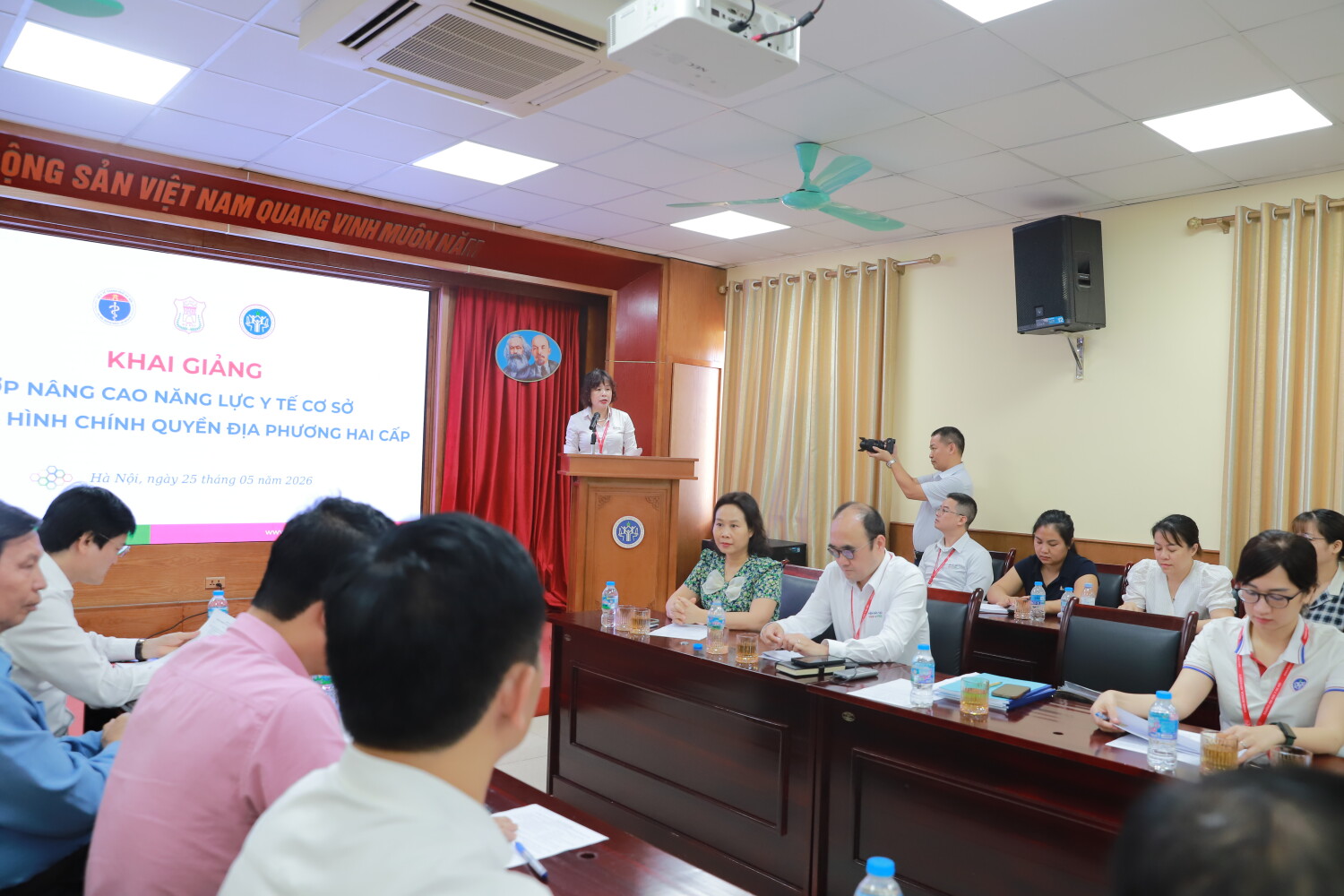
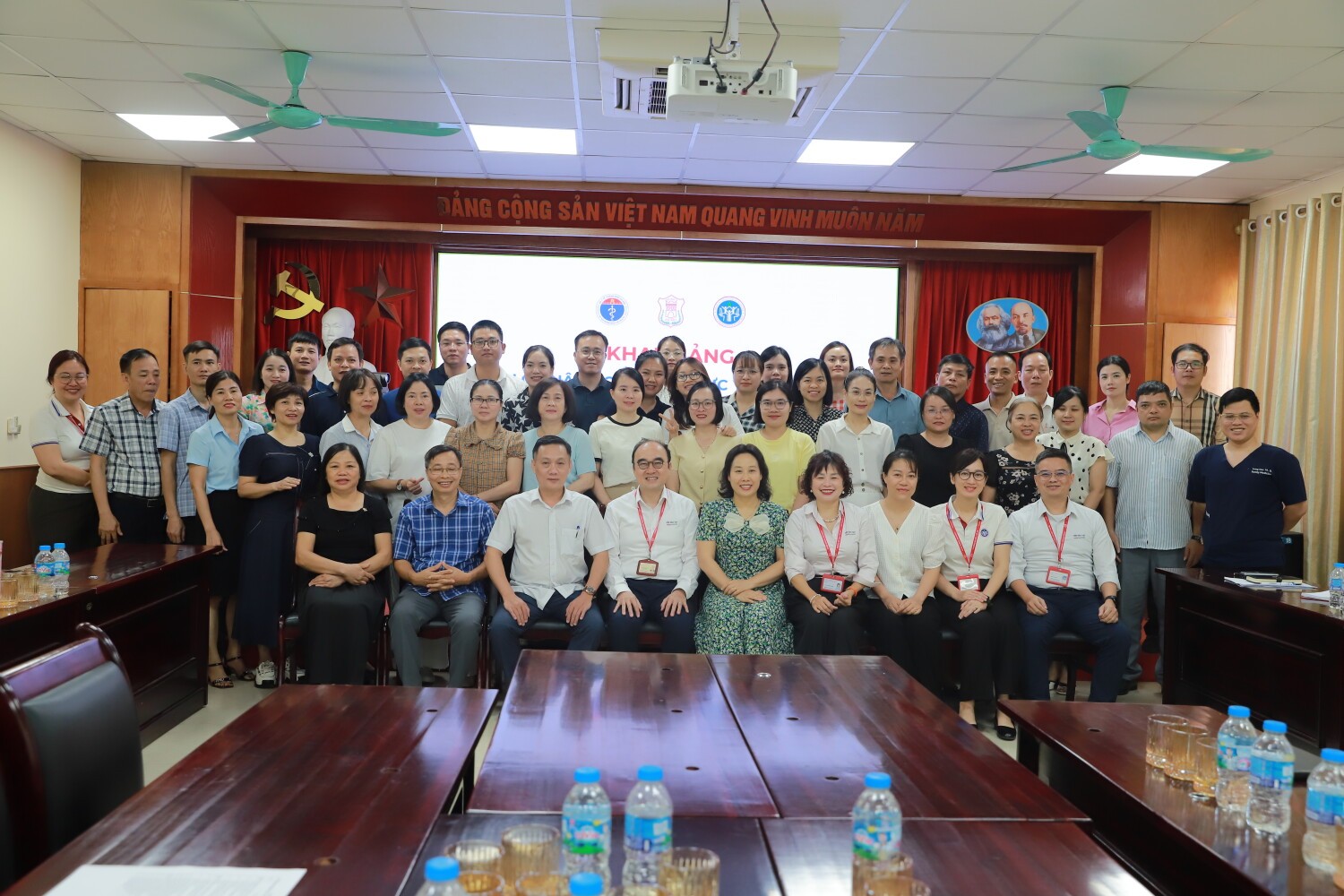
 On the afternoon of May 25, 2026, the Hanoi Department of Health coordinated with the School of Preventive Medicine and Public Health - Hanoi Medical University to organize the opening of a continuous training class "Improving grassroots medical capacity according to the two-level local government model" to standardize and improve the capacity of grassroots medical staff, meet the requirements of innovating the local management organization model and improving the quality of human health care. people in the new period.
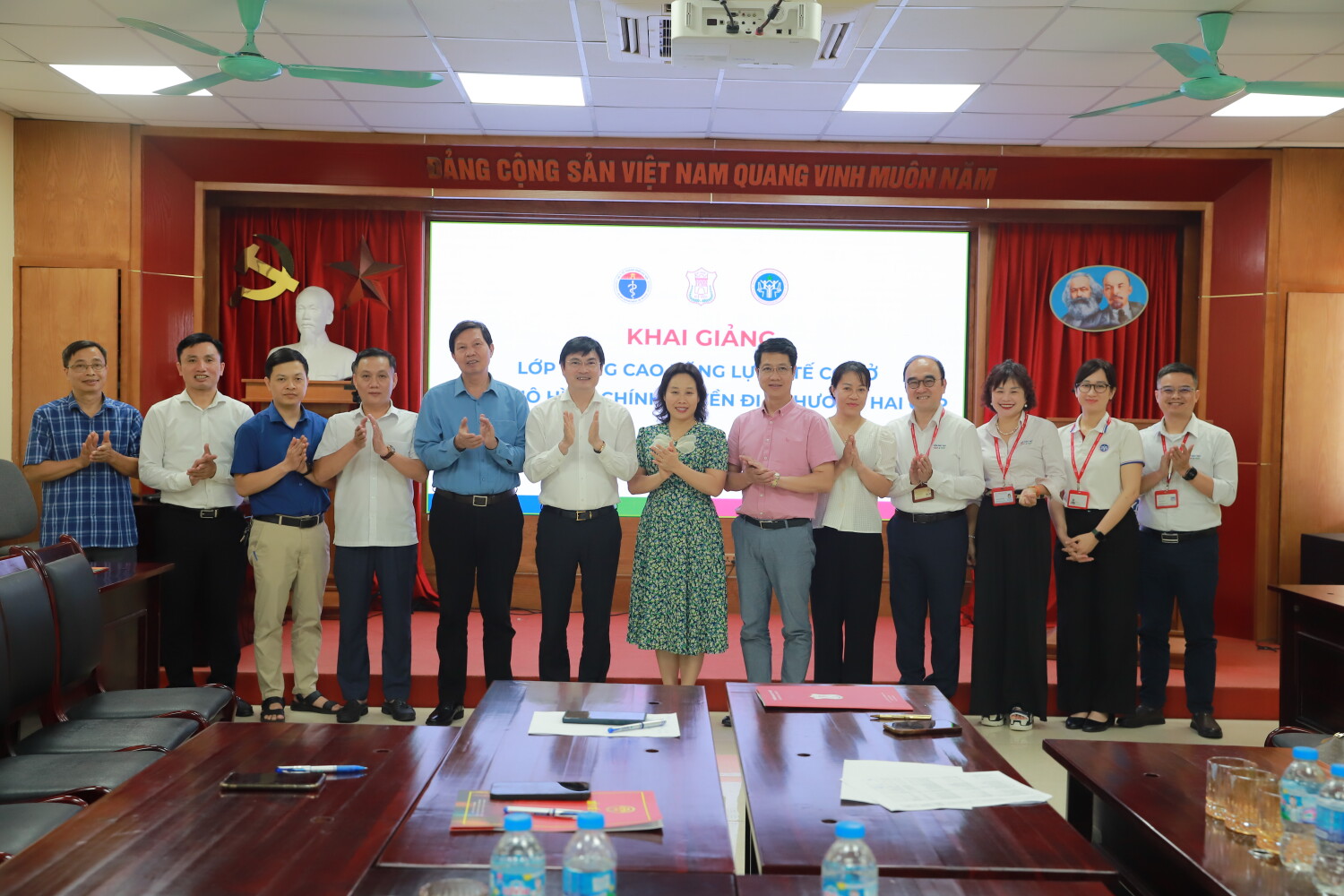
 Attending the program are:
- Associate Professor, Dr. Ho Thi Kim Thanh - Vice Rector of Hanoi Medical University, Head of the Department of Family Medicine;
- Prof.Dr. Le Minh Giang - Director of the School of Preventive Medicine and Public Health;
- Associate Professor, PhD. Le Thi Thanh Xuan - Deputy Director of the School of Preventive Medicine and Public Health;
- On behalf of the Hanoi Department of Health, there are: Dr. Nguyen Trong Dien - City Party Committee member, Party Secretary, Director of Hanoi Department of Health, Dr. Tran Van Chung - Deputy Director of Hanoi Department of Health, representatives of leaders of specialized departments of the Department along with leaders of People's Committees of communes and wards, leaders of medical stations and students attended directly and online from bridge points in the City.
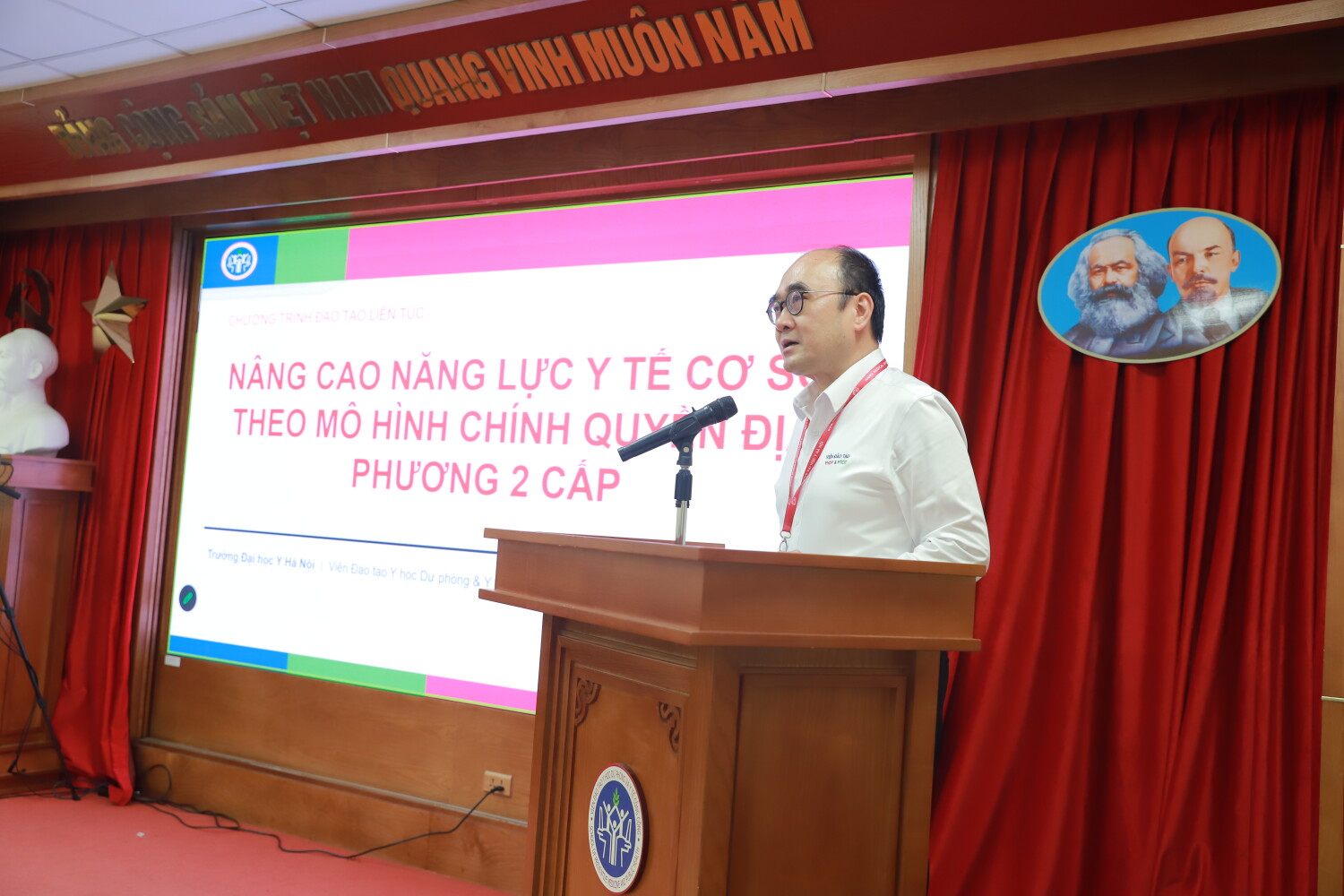
 Previously, on April 7, 2026, Hanoi Medical University held a meeting of the Continuous Training Program Appraisal Council with the topic "Improving the capacity of grassroots healthcare according to the two-level local government model". The Council brings together experts, scientists and health industry leaders; in which PhD.BS. Nguyen Trong Dien - Director of Hanoi Department of Health participated as a Council member. The program is built on the basis of closely following the actual operations of medical stations, ensuring feasibility, compliance with regulations on continuous training and requirements for innovation of grassroots medical activities.Speaking at the opening ceremony, the representative of Hanoi Medical University emphasized the role of grassroots medicine in the health care system, and determined that standardizing the capacity of commune and ward staff is an important condition to adapt to new management requirements, gradually shifting from a treatment mindset to comprehensive health care for the people.
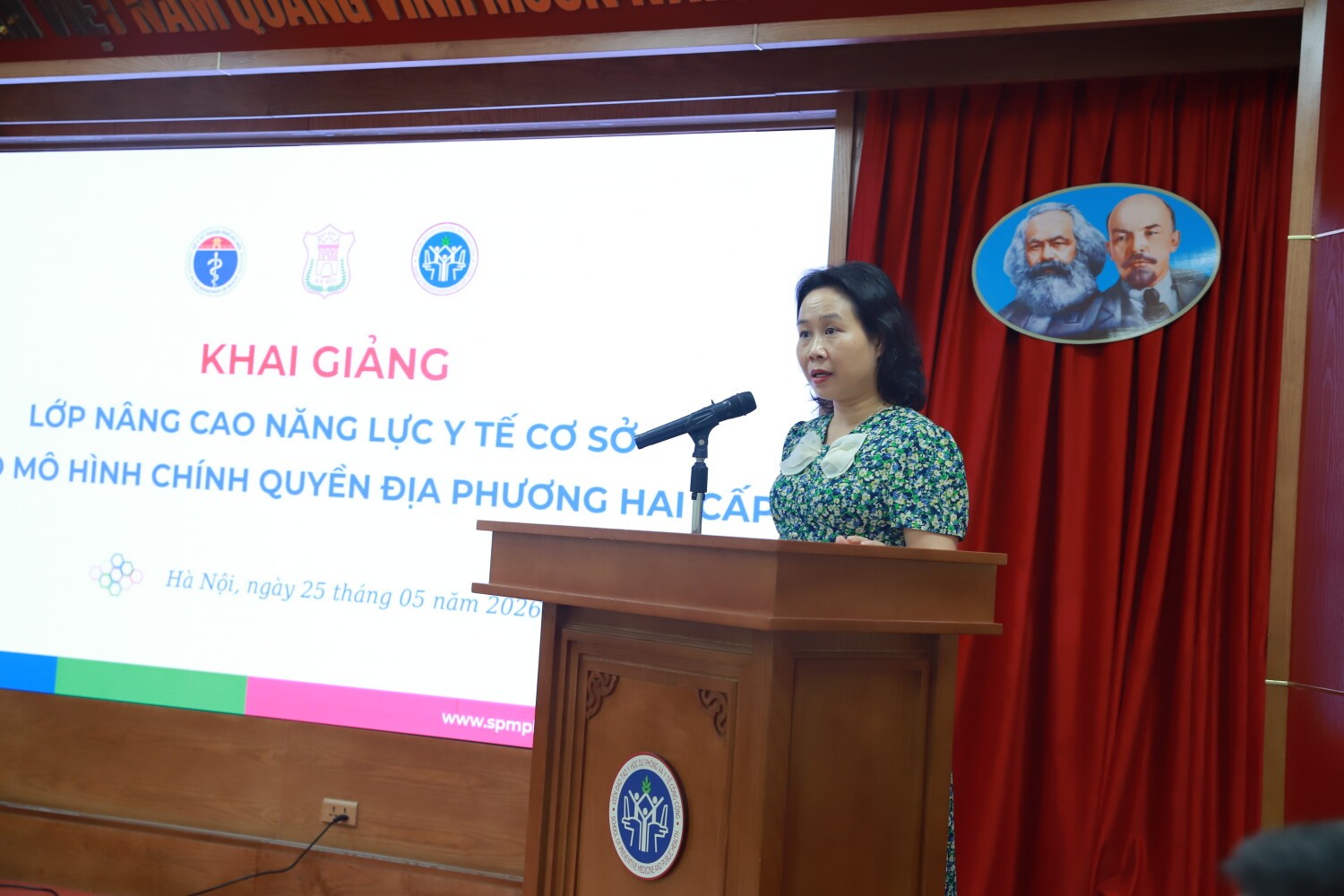 Speaking at the program, Dr. BS. Nguyen Trong Dien - Member of the Party Committee, Secretary of the Party Committee, Director of the Hanoi Department of Health emphasized that improving grassroots medical capacity in the context of implementing the two-level local government model is not only a requirement for organizational innovation but also a requirement for a comprehensive transformation of the way the health sector operates.
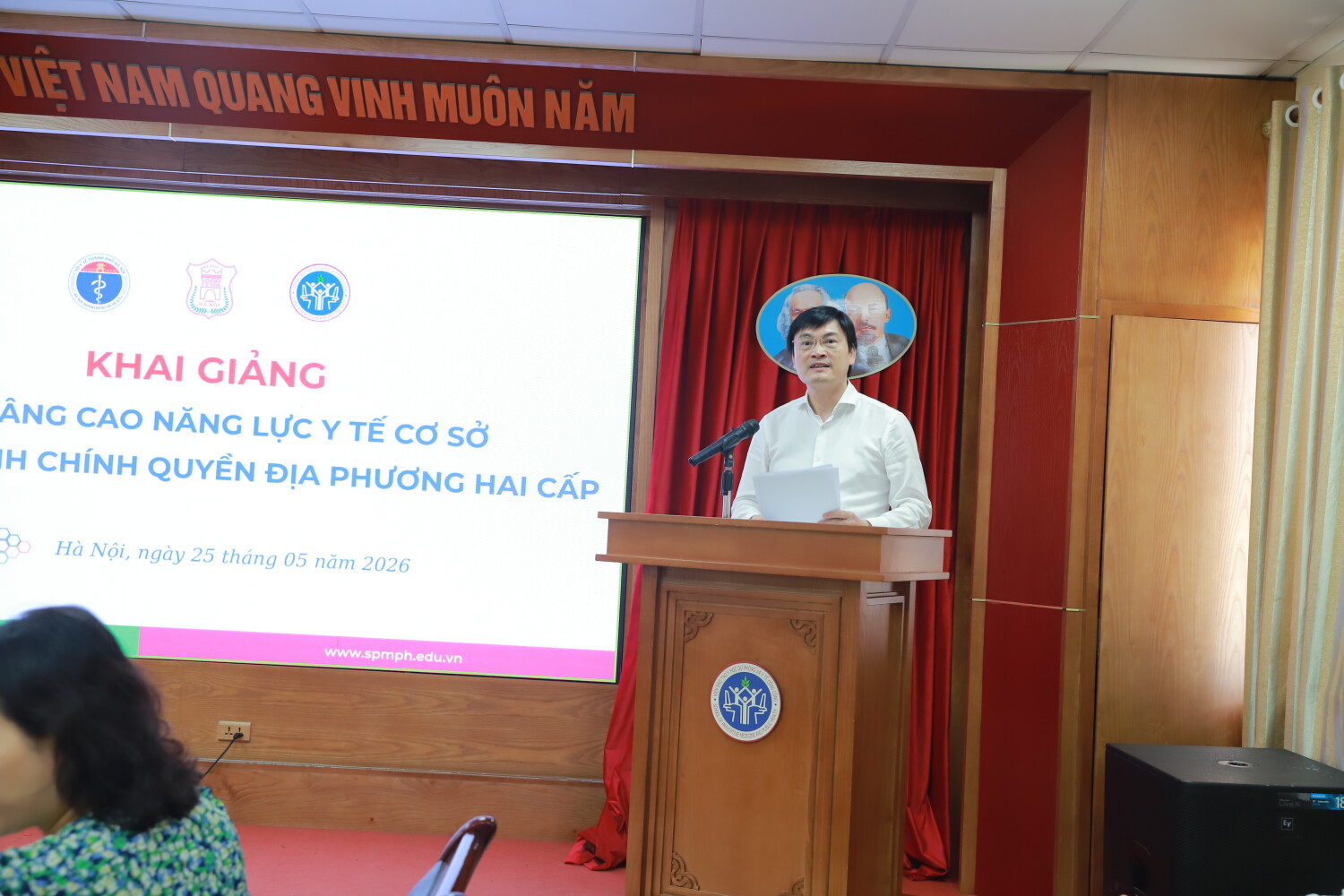
 According to the Director of the Hanoi Department of Health, the grassroots health care level needs to gradually shift from a purely preventive approach to a model of comprehensive health care and management for the people, taking the people as the center and managing health according to the life cycle. In particular, medical stations need to perform well key tasks such as periodic health checks; manage people's health on the Electronic Health Record platform; disease prevention and control; Food hygiene and safety management in the area.
The Director of the Department said that, based on that practical requirement, the Capital Health sector has proactively coordinated with Hanoi Medical University to propose building a training program to improve capacity for grassroots healthcare; At the same time, together with the School and the School of Preventive Medicine and Public Health, organize appraisal and completion of program content before official implementation.
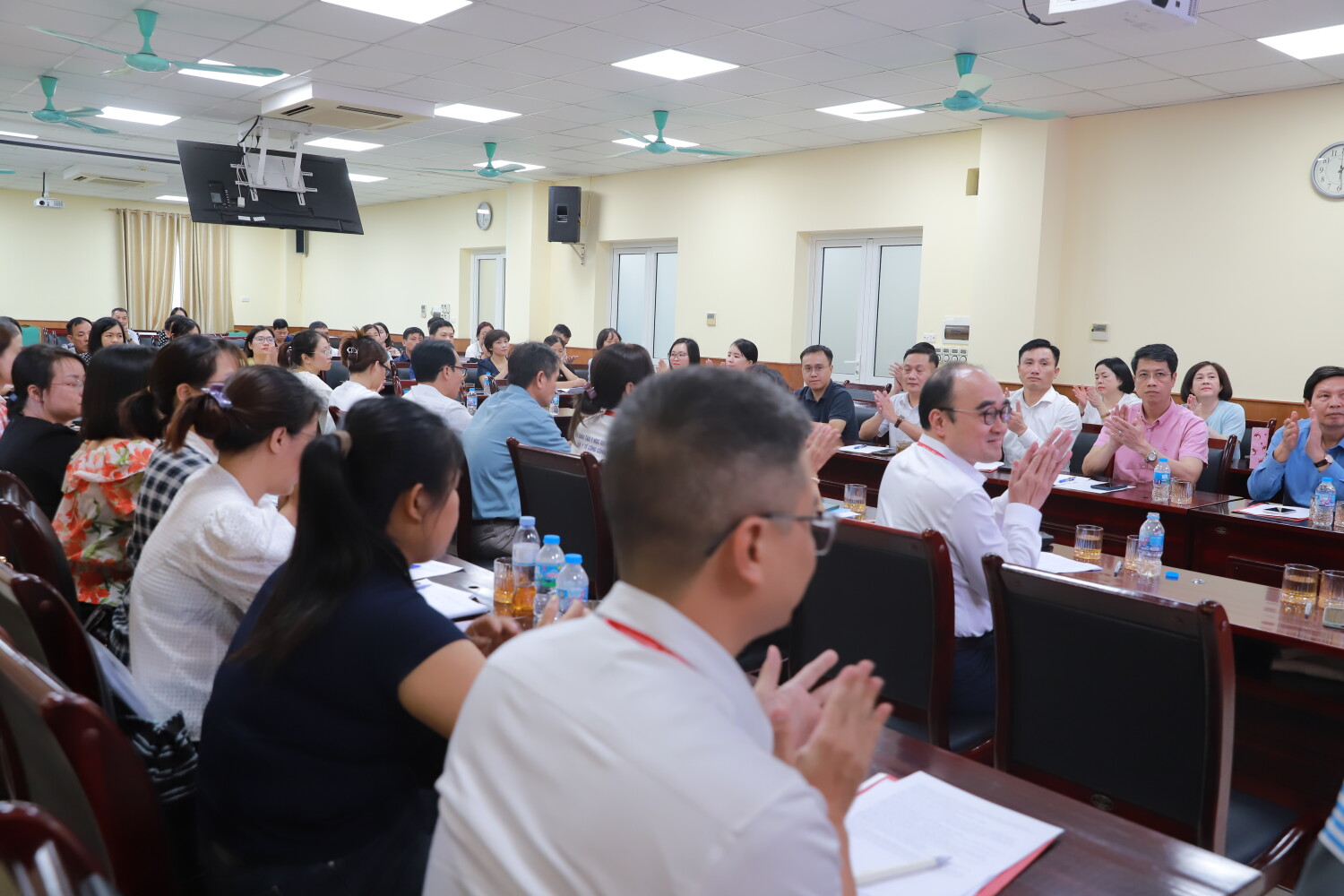
The class opening today is the first class with 50 students from 05 pilot communes and wards, including leaders of the People's Committee, leaders of the Department of Culture and Society, leaders of Health Stations and stations. After the course, the topics will continue to be reviewed, updated and perfected to gradually replicate, ensuring training meets the practical needs of the grassroots level.According to the direction of the Hanoi Department of Health, based on the results of pilot implementation, the program will continue to be expanded to train 126 communes and wards in the City. At the same time, the Department of Health has coordinated with Bach Mai Hospital to develop a training program on first aid for 126 communes and wards, gradually forming a regular and continuous training mechanism for the grassroots health system.
In addition, the Hanoi Department of Health is completing a project to establish a training and technology transfer center for the Hanoi health sector, connecting with hospitals and training facilities in the capital to develop high-quality human resources for the entire industry, with priority given to improving the capacity of grassroots healthcare and medical teams at all levels.
The Director of the Department affirmed that, along with synchronous investment in infrastructure and equipment, promoting digital transformation and applying science and technology, the Hanoi Health sector aims to build a pioneering - groundbreaking - integrated capital health system; modern, intelligent and humane, increasingly meeting the requirements of caring for, protecting and improving people's health.According to the approved program, the course includes 160 periods, of which 48 are theoretical and 112 are practical, focusing on the organization of medical station operations; Managing the health of the entire population through electronic health books; risk-based health management; public health surveillance; Investigate and respond to epidemics in the community; Safe vaccination practices and food safety.Through the program, the Hanoi Health sector hopes to create substantive changes in the capacity of frontline teams, promote the role of grassroots health care in primary health care, health management of the entire population and effectively deploy the tasks of digital transformation of the health sector in the new period.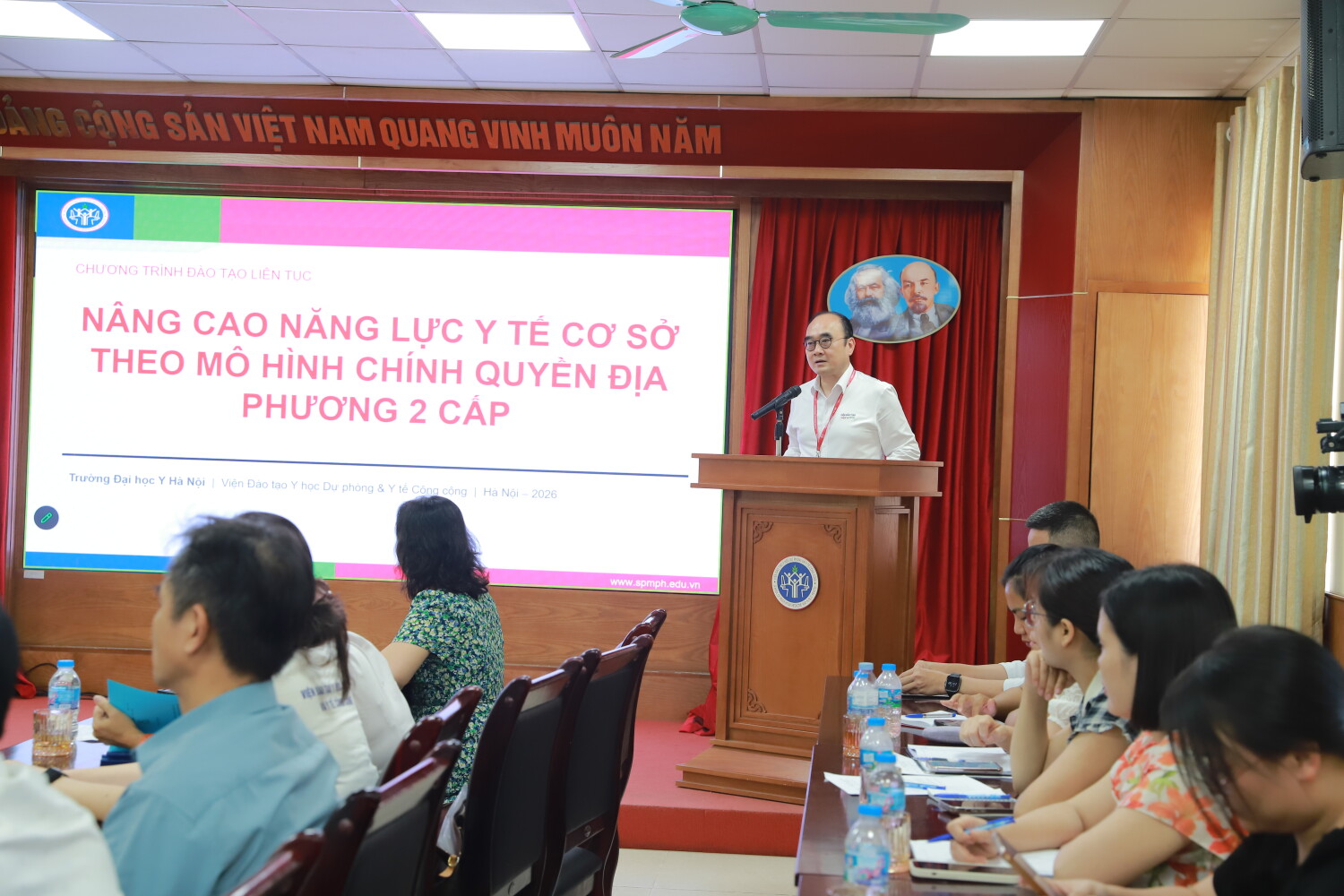
Source: Capital health
Photo: SPMPH
 Institute of Preventive Medicine & Public Health Training
 Website:/
