
 In accordance with Official Dispatch No. 51/HĐT regarding the supervision of educational management at the School of Preventive Medicine and Public Health (SPMPH), based on the University Council's regulations and the 'Three Publics' policy of Hanoi Medical University, the University Council's supervisory delegation held a working session with the SPMPH on the afternoon of 5 December 2023.
 The supervisory delegation consisted of the following members:
 Prof. PhD. Le Thi Huong – Head of the Department of Training, Science and TechnologyPhD. Do Nam Khanh – Member of the Department of Training, Science and TechnologyMSc. Le Thu Phuong – Specialist, Office of Undergraduate TrainingMSc. Tran Thi Hao – Specialist, Office of Postgraduate TrainingMSc. Tran Mai Van – Deputy Head of the Office of Inspection and Legal AffairsMSc. Tong Thi Khuyen – Deputy Head of the Office of Science and Technology Management
Representing the SPMPH were the School's Board of Directors and the Office of Training, Scientific Research and International Cooperation.
 The SPMPH currently manages three undergraduate programs: Doctor of Preventive Medicine, Bachelor of Nutrition, and Bachelor of Public Health, with a total of 945 students, and 261 postgraduate students across 22 disciplines. Throughout the implementation of educational activities, the School has consistently coordinated with the University's departments to ensure compliance with established procedures and regulations.
Regarding science and technology, the supervisory delegation acknowledged and commended the School as a leading unit with significant strengths in scientific research, having implemented numerous ministerial-level projects, published international articles, and organized various medical conferences and seminars that have brought together many domestic and international experts.
However, alongside the advantages provided by the support from the University's departments and the School's leadership, the School's educational sector still faces certain challenges regarding human resources, the implementation of information technology applications, and funding for educational and scientific research activities, as well as support for enhancing the quality of theses and dissertations.
 Through this exchange, the supervisory delegation gained an understanding of the current status of undergraduate and postgraduate educational management at the School, as well as the advantages and difficulties encountered during implementation. This serves as a basis for the delegation to report back to the University Council to develop timely solutions to address the existing challenges.
The School also expressed its appreciation for the close attention paid by the University Council to the School's educational activities, which contributes to promoting and enhancing the overall quality of education at the University.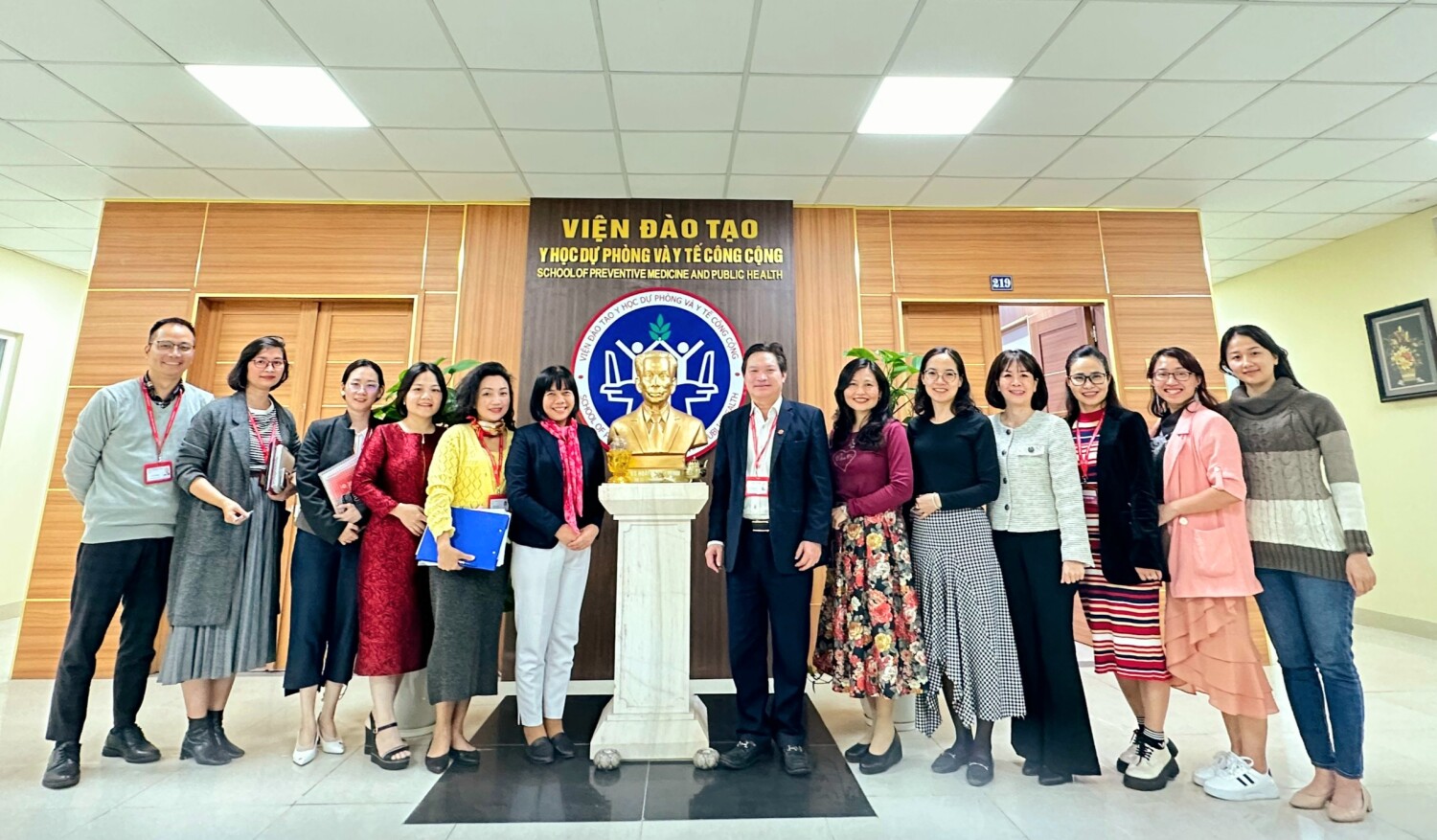
 School of Preventive Medicine and Public Health (SPMPH)
 Website:/