
Are the 21 micronutrients in school milk really important?
What happens to the body if it lacks micronutrients?
Associate Professor, Dr. Nguyen Quang Dung, Deputy Head of the Department of Nutrition and Food Safety (School of Preventive Medicine and Public Health, Hanoi Medical University) said that micronutrients are substances that the body only needs in very small amounts but if lacking will seriously affect the body's development.
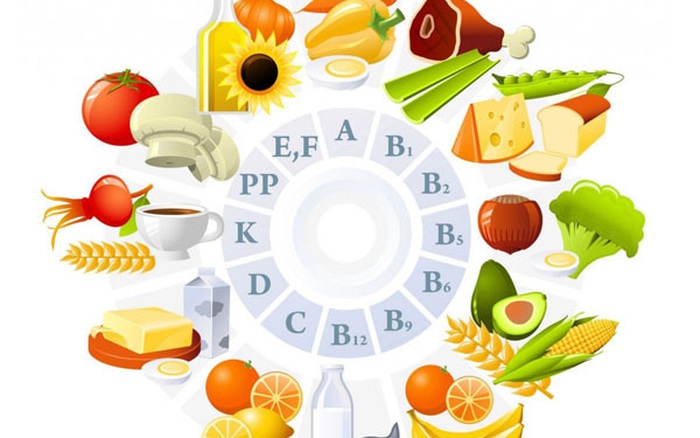
According to Associate Professor. Nguyen Quang Dung, there are 29 different micronutrients necessary for the body. These micronutrients are found in many foods of animal and plant origin, such as eggs, milk, meat, vegetables, fruits, etc. If micronutrients are lacking, it will affect the body's development and may cause some diseases. For example, vitamin A found in meat, fish, eggs, milk... is needed for body growth, helps brighten eyes, strengthens the immune system to help prevent infections. Vitamin A deficiency will cause night blindness, dry eyes, corneal ulcers causing blindness, and slow growth.

Micronutrients are very important for the body's development
Iron is an important substance involved in the process of hematopoiesis and part of the structure of the brain. Iron is found in red meat, liver and animal organs, molluscs, beans, pumpkins, etc. If a child has an iron deficiency, it will lead to anemia, reduce physical and intellectual development, and reduce the body's resistance. For pregnant women, anemia is often due to iron deficiency. This will have a negative impact not only on the mother herself but also on the fetus. Accordingly, pregnant women are susceptible to miscarriage, stillbirth, premature rupture of membranes, placental abruption, premature birth, high risk of preeclampsia - eclampsia, amniotic infection, premature rupture of membranes; postpartum hemorrhage. Babies are often born with low birth weight, premature birth, postpartum jaundice, and prolonged pediatric nursing treatment.
Zinc helps increase absorption, increase protein synthesis, increase appetite, strengthen the immune system, and help children grow taller. Zinc is found in shrimp, eels, oysters, mussels, pork liver, milk, beef, egg yolks, fish, soybeans, and oil seeds. Zinc deficiency will cause children to have anorexia and be susceptible to infection.

Associate Professor, Dr. Nguyen Quang Dung, Deputy Head of the Department of Nutrition and Food Safety (School of Preventive Medicine and Public Health, Hanoi Medical University)
Vitamin C cIt helps the body fight oxidation, participates in many important life activities of the body such as collagen formation, and stimulates the small intestine to absorb iron. Vitamin C is abundant in vegetables and fruits, especially guava. Vitamin C deficiency will lead to swollen gums, easy bleeding, easy to get sick, and fatigue when children are active.
Calcium and Vitamin D: Calcium is found in eggs, milk, soybeans, vegetables, nuts, fish, seafood, etc. Calcium and vitamin D play an important role in the formation and development of bones and teeth. Lack of vitamin D and calcium will cause children to grow teeth slowly, have restless sleep, and sweat a lot.
There are many ways to supplement micronutrients
Associate Professor, Dr. Nguyen Quang Dung said that when children are deficient in micronutrients, there are 3 solutions to supplement them, including:
Short-term solutions (direct supplementation of micronutrients such as taking vitamin A, iron tablets, iodine oil...); Medium-term solution (fortification of food); Long-term solution (diversify meals, comprehensively improve the quality of people's meals).
Analyzing these solutions, Associate Professor. Dung said that in cases where micronutrient deficiency is common or severe, micronutrients are synthesized into preparations for direct supplement use. Currently, Vietnam is implementing a program to take high doses of Vitamin A to prevent vitamin A deficiency and treat dry eyes. Or give pregnant women iron pills to prevent nutritional anemia.
In addition, micronutrients can be fortified through food. Accordingly, manufacturers add a certain amount of one or several types of micronutrients to certain foods that most people eat and consume regularly. This is a simple, effective measure that easily achieves high coverage and sustainability.
In Vietnam, there are currently many foods fortified with micronutrients available on the market, such as salt or soup powder mixed with iodine; iron-fortified fish sauce; iron-zinc fortified biscuits and most recently the school milk program.
According to Circular 31/2019 issued by the Ministry of Health on December 5, 2019, there are 21 micronutrients added in the School Milk Program.
However, Associate Professor. Nguyen Quang Dung said that a long-term and basic measure with high sustainability is to improve the quality of people's meals, so that the diet provides adequate and balanced needs, including micronutrients.
Associate Professor. Dung also said that, for school milk, when the Ministry of Health has decided to add micronutrients, it must have a scientific basis. However, the implementation also needs to be calculated and balanced for children in each region, because in urban areas, children's nutrition is basically enough through meals, but they are sedentary, so they are at risk of obesity. Meanwhile, in mountainous areas, children rarely drink milk and malnutrition is high. Therefore, the state should have separate types of milk for each subject in each region to supplement and help children develop comprehensively physically and mentally.
According to Decision 1340/QD-TTG, dated July 8, 2016 of the Prime Minister on approval
The school milk program improves nutritional status, contributing to raising the stature of preschool and primary school children by 2020:
1. Objectives:
Improve the nutritional status of preschool and primary school children through activities of giving children milk every day to reduce the rate of malnutrition, improve the stature and physical strength of Vietnamese children, contributing to the development of human resources in the future.
2. Indicators:
- By 2020, 90% of fathers, mothers, and caregivers in urban areas and 60% of fathers, mothers, and caregivers in rural areas of children who drink milk will receive communication, education, and nutritional advice.
- By 2020, 100% of kindergarten and elementary school students in poor districts will be able to drink milk under the School Milk Program.
- By 2020, 70% of kindergarten and elementary school students in urban and rural areas will be able to drink milk under the School Milk Program.
- Meeting the energy needs of preschool and elementary school children will reach 90% - 95% by 2020.
- Increase the ratio of animal protein/total protein in the diet of preschool and primary school children to over 40% by 2020.
- Meet the iron, calcium, and vitamin D needs of preschool and elementary school children by 30% by 2020.
- By 2020, reduce the rate of underweight malnutrition in preschool and primary school children by an average of 0.6%/year.
- By 2020, reduce the rate of stunting in preschool and primary school children by an average of 0.7%/year.
- By 2020, the average height of children entering school (6 years old) will increase from 1.5 cm - 2 cm in both boys and girls compared to 2010.
*******
Linh Tran, Vietnam Women's Newspaper
https://phunuvietnam.vn/21-vi-chat-dinh-duong-trong-sua-hoc-duong-co-thuc-su-quan-trong-20191226141851761.htm