

Vaccination is the most effective method for preventing dangerous infectious diseases in children. However, due to their young age and sensitivity, many parents are concerned about post-vaccination reactions, as well as the monitoring and management of issues before and after immunization. How should children be cared for before, during, and after receiving a vaccine?
1. CHILD CARE:
Continue breastfeeding or provide the child with plenty of fluids.
You may sponge the child or apply a cool compress if they have a mild fever between 37.5°C and 38.5°C.
Administer Paracetamol for fever at a dosage of 10-15mg/kg of body weight per dose if the child's temperature exceeds 38.5°C, up to a maximum of 6 doses in 24 hours (with a minimum interval of 4 hours between doses). Do not use Aspirin to reduce fever.
- MONITORING THE CHILD:
Fever: The child may develop a mild fever; this is a normal bodily response to the vaccine and typically resolves on its own within 1-2 days.
Injection site swelling, redness, and pain: Do not apply lemon juice, potato slices, or adhesive bandages to the site.
Generalized or localized rash: This is common in children with allergic tendencies and will disappear on its own after a few days. If the child appears uncomfortable, consult a healthcare professional.
Other symptoms: The child may be fussy, experience loss of appetite, or become easily agitated.
Ensure the child is monitored for 30 minutes at the vaccination facility following the injection.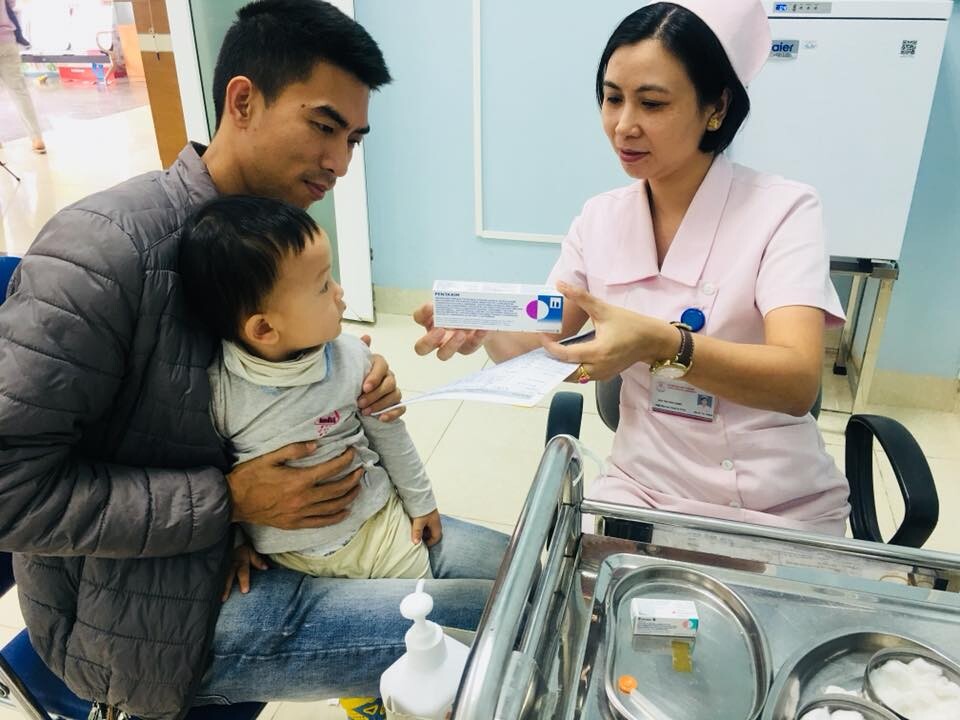
Monitoring the child for 30 minutes post-vaccination at the facility is essential.
SEEK MEDICAL ATTENTION IMMEDIATELY IF THE CHILD EXHIBITS THE FOLLOWING SIGNS:
- Refusal to feed or poor feeding.
- High fever over 38.5°C that persists, seizures, cyanosis, or difficulty breathing.
- Abscess formation or severe swelling and pain at the injection site.
- Inconsolable crying or persistent fussiness lasting for 3 hours.
Reference: Health and Life Newspaper (Báo Sức khỏe & Đời sống)